The supply chain serves as a core platform driving sustainable growth and strengthening competitiveness. From high-tech agricultural cultivation, digitalized procurement, and smart logistics to Integrated Business Planning (IBP) and global expansion strategies, AgriS’s effective supply-chain management has enabled the foundation of a sustainable, flexible, and international value chain.
An efficient supply chain allows AgriS to operate seamlessly from farm to table, ensuring stable sugarcane production and quality across its raw-material zones in Vietnam, Laos, Cambodia, and Australia. Furthermore, effective supply chain management has optimized production efficiency by controlling costs, inventories, and harvest timing, ensuring sugarcane is processed within the prescribed timeframe. With a well-structured and flexible supply chain system, AgriS has become a trusted partner, accounting for 46% of the domestic market and exporting to more than 76 countries and territories worldwide. In addition, AgriS’s circular and low-emission supply-chain model has contributed directly to its overall ESG goals and Net Zero by 2035 commitment.
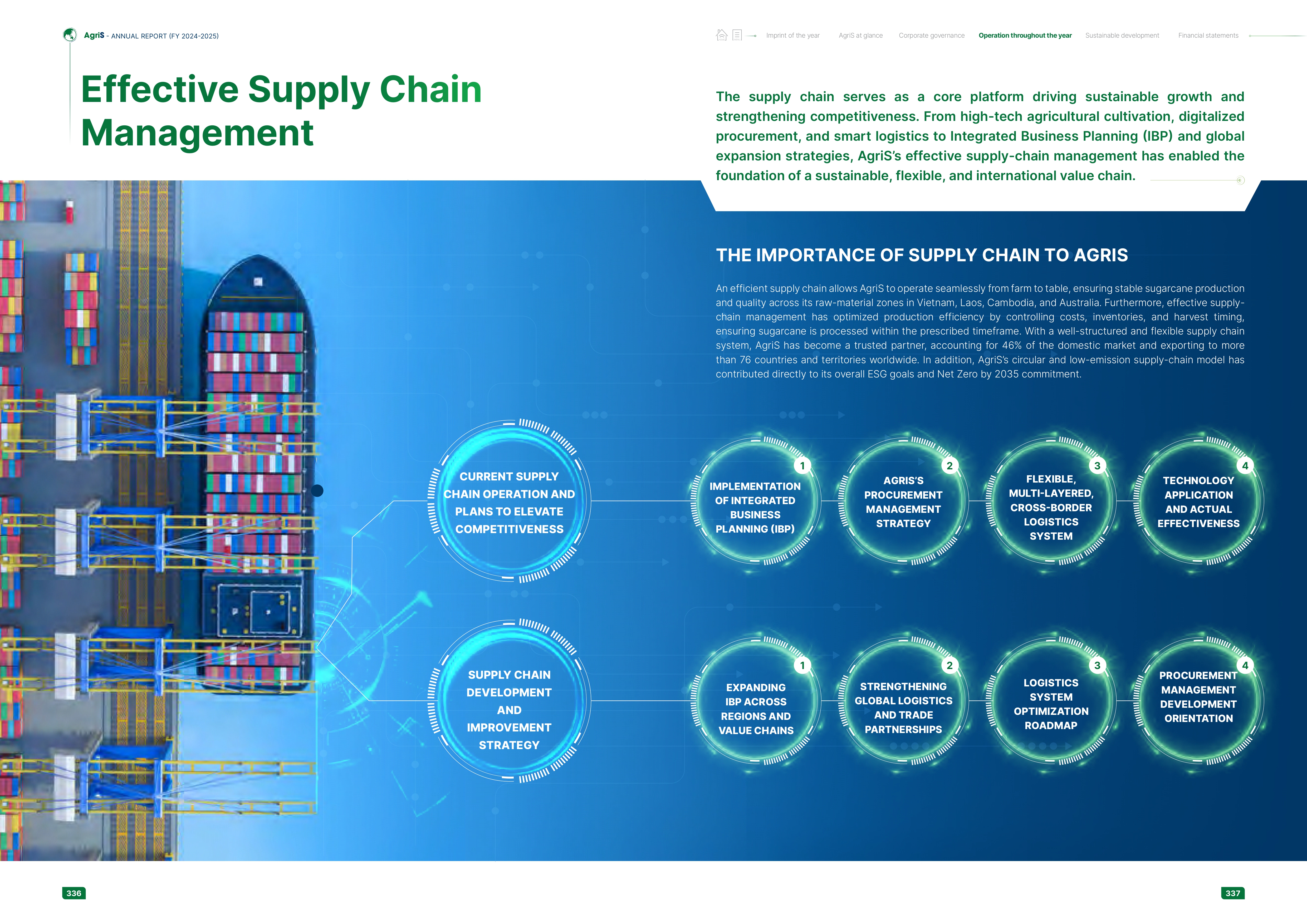
AgriS is among the pioneering agricultural enterprises in Vietnam to implement Integrated Business Planning (IBP) with a focus on digitalization, sustainable supply chains, and big data governance. For AgriS, IBP is not merely a planning tool; it is an integrated decision-making model that aligns strategy, finance, and operations to:
Synchronize the entire value chain: from farmers and raw material areas to factories, warehouses, and domestic as well as international customers.
Enhance agility in responding to the high level of uncertainty in the agricultural sector, including:
Weather fluctuations;
Brix levels (the sugar content indicator in sugarcane);
Market demand; and
Global sugar prices.
Optimize net profit across the entire value chain rather than individual segments: IBP serves as the strategic "brain" of AgriS' multinational agricultural production system, enabling the company to make faster, data-driven decisions and effectively manage profitability across the whole value chain, rather than focusing solely on isolated costs.
To support its integrated planning framework, AgriS leverages a range of advanced technologies and management tools, including:
Artificial Intelligence (AI) and satellite data to forecast crop yields, Brix levels, and sugarcane output by region and season.
Rough-Cut Capacity Planning (RCCP) to balance production, inventory, and factory capacity on a weekly and monthly basis.
Business Intelligence (BI) Dashboards that integrate actual performance, plans, and variance analysis to support the Sales and Operations Planning (S&OP) process.
Monthly S&OP and Sales & Operations Execution (S&OE) cycles, which connect production, sales, exports, and finance to ensure alignment and effective execution across the organization.

The new fiscal year serves as a crucial stepping stone for AgriS to pursue the revenue ambition of 60,000 Billion VND by 2030
As a result, the Supply chain division has outlined an action framework, anchored around the following strategic priorities:
1. Strategic initiatives to attain SCCT’s three core objectives
- Cost efficiency
- Inventory optimization
- Continuous enhancement of customer service quality
2. Strategic initiatives to build SCCT infrastructure for the new growth phase
- Adherence to ESG operational standards
- Digitalization of SCCT processes
- Assurance of sustainable sourcing
3. Strategic initiatives to optimize resources across AgriS’s value chain
- Workforce capacity building, especially in emerging sectors
- Supply chain development towards global integration
- Optimization of the entire value chain ecosystem
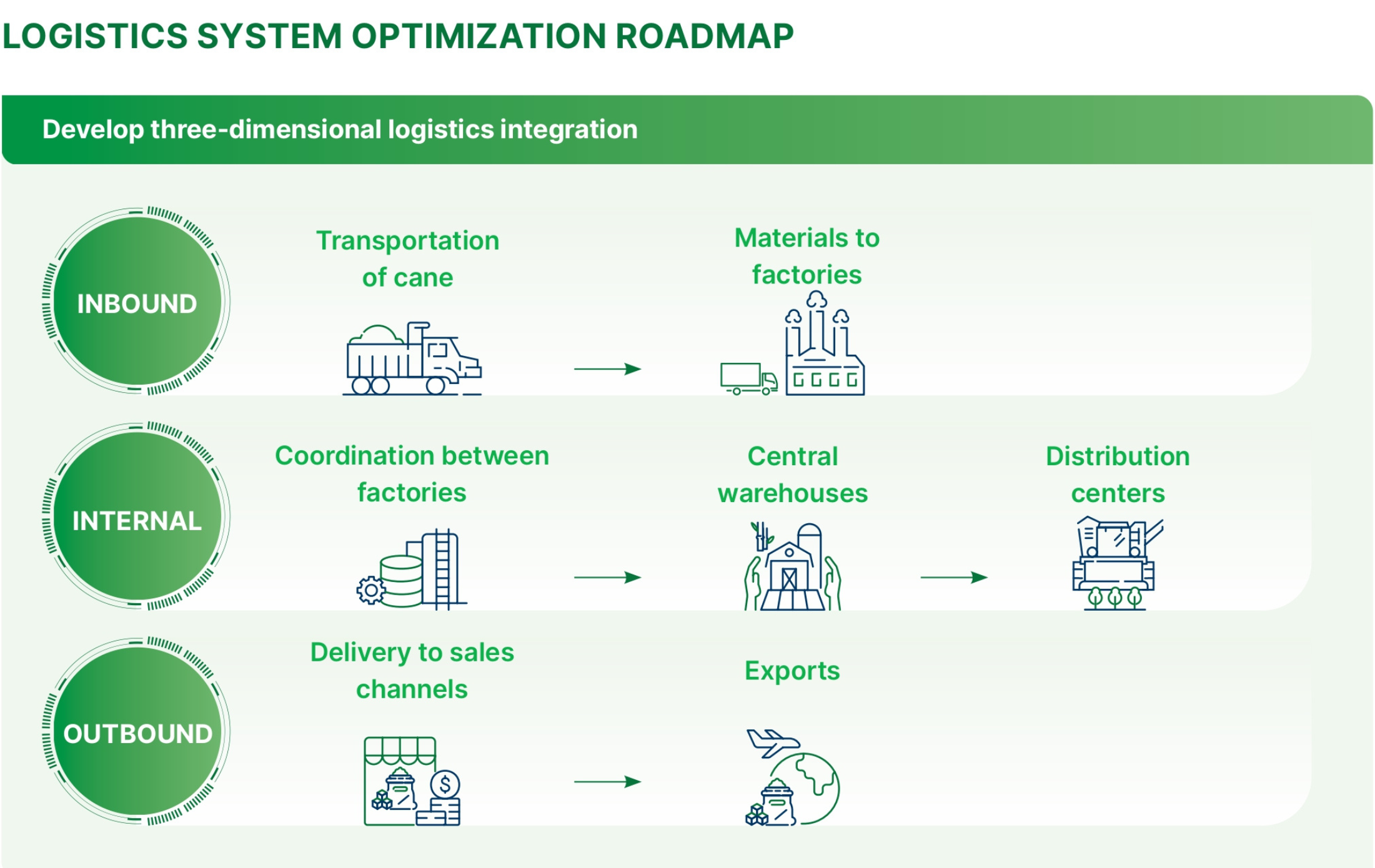
To ensure a consistent approach in the coming year, functional departments’ operations, SCCT projects implementation, and activities under the 3-Center model need to be aligned with these strategies as follows:
1. Planning and Coordination
- Continue refining the Integrated Business Planning (IBP) framework, extending its scope to Finance and Operations Planning (F&OP), while further enhancing existing A&OP, P&OP, and S&OP processes;
- Improve demand forecasting capabilities, with a focus on new products;
- Collaborate with ComC to advance the New Product Development (NPD) process and initiatives aimed at improving customer service;
- Work closely with ProC to optimize manufacturing activities utilizing current resources, targeting a boost in Total Effective Equipment Performance (TEEP) and increasing annual production days to over 300 for key plants (BHC, TTCS, NHS);
- Partner with logistics, QHSE, and finance departments to standardize the management of slow-moving inventory in terms of cost management and operational efficiency;
- Coordinate with AgrC to implement the IBP model for agricultural business and production.
2. Logistics Management
- Fully deploy the Warehouse Management System (WMS) and Transport Management System (TMS), digitizing all SCCT logistics operations across three Layers;
- Redefine logistics framework to align with AgriS’s transformation strategy for new sectors and logistics solutions;
- Enhance logistics services to support ComC’s e-Selling and B2C operations;
- Collaborate with GMA to execute international logistics activities for import and export needs;
- Establish standards and procedures for AgrC’s logistics operations;
- Implement the Cost to Serve (CTS) model across Centers to manage, control, and track monthly expenses effectively.
3. Procurement Operations
- Review and upgrade the centralized procurement regulations to support the model of three Centers;
- Analyze the cost components of goods to develop efficient procurement strategies;
- Ensure a network of reliable and high-quality suppliers is in place to support the expansion of AgriS’s FBMC sectors;
- Maximize ERP adoption in procurement and bidding processes to improve operational efficiency, preparing for e-procurement implementation;
- Introduce Supply Chain Finance solutions to optimize cash flow in procurement activities;
- Expand the supply network to neighboring countries and the wider Asia region.
4. Additional Tasks and Responsibilities
- Complete the integration of processes and regulatory documents, following the new structure of three Centers and three Layers;
- Work with relevant departments to standardize and manage the SCCT database within AgriS’s overall system, implementing continuous management measures and processes for SCCT operations;
- Develop training programs to improve the skills and capabilities of SCCT staff to meet the Company’s evolving requirements.
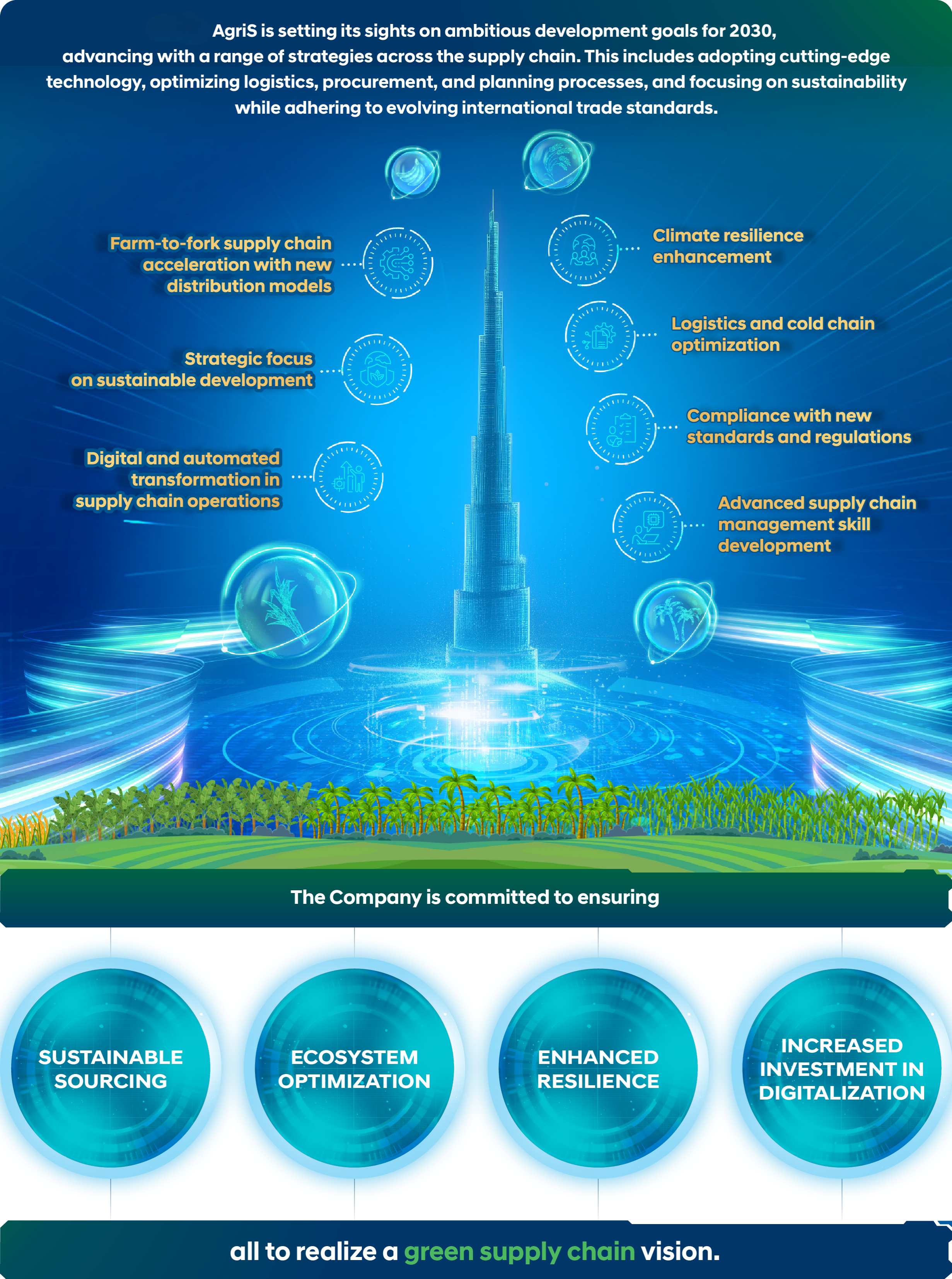
1. Digital and automated transformation in supply chain operations
From the onset of FY 2024-2025, AgriS has initiated the digital integration of logistics management. The implementation of TMS/WMS systems is underway to digitize warehousing operations by leveraging artificial intelligence (AI) to control and streamline warehousing and distribution processes, improve customer service, and automate cost control. Next, AgriS will digitize procurement and planning activities, alongside establishing a comprehensive product traceability system. The Company’s research and development initiatives for 2025-2030 include:
- Investment in Internet of Things (IoT) technology and big data for real-time monitoring and optimization of production, transportation, and distribution. Leveraging real-time data allows for faster, more accurate decisionmaking, reducing costs and boosting productivity;
- Exploring blockchain technology for agricultural product traceability, ensuring quality assurance and building consumer trust while meeting increasingly stringent food safety standards both domestically and internationally;
- Integrating AI to harness big data for market demand forecasting and supply chain optimization. AI-driven automation will support processes such as production forecasting, inventory planning, and transportation management, thereby reducing losses and optimizing costs across the chain.
2. Strategic focus on sustainable development
- Organic food and sustainable farming: AgriS is focused on developing high-nutrient plant-based products, sustainable agribusiness models toward a one-touch solution, and advanced agricultural technologies. These initiatives require synchronized infrastructure and a fully integrated supply system to align with Agri Center, which spearheads this strategic direction for AgriS.
- Building a green supply chain: AgriS’s priorities include mitigating carbon emissions, using renewable energy, and adopting low-impact farming practices. Key strategies, as a result, involve the use of biomass fuel, reducing chemical fertilizers, recycling materials, cutting down plastic use, and partnering with eco-committed transport providers by adopting electric and solar-powered vehicles.
- Promoting circular agriculture: AgriS is integrating recycling and reuse into agriculture, utilizing by-products such as pressmud and ash for fertilizer, and using bagasse to generate boiler fuel, thus conserving resources and protecting the environment.
- Establishing global partnerships: With a vision of a multinational supply chain, AgriS is expanding connections with suppliers across various regions to enhance sourcing sustainability and minimize risks.
3. Farm-to-fork supply chain acceleration with new distribution models
- Developing short supply chains: By establishing direct consumer connections through shorter distribution channels, AgriS reduces intermediary costs, boosts transparency of product origin and quality, and delivers fresher products from farm to fork. Hence, e-commerce platforms and direct-to-consumer retail are central to this strategy.
- Strengthening partnerships with farmers: This enables quicker responses to market demands and trends, particularly for essential agricultural supplies like fertilizers, pesticides, and equipment. This approach supports efficient production and purchasing plans while aligning Environmental and Social (E&S) factors and green supply chain practices at the source of AgriS’s plant-based products.
4. Climate resilience enhancement
- Adopting climate-smart agriculture: AgriS is implementing climate-adaptive practices, including waterefficient irrigation systems, weather sensors, and resilient farming methods, along with research into climate-hardy crop varieties to mitigate the impact of climate change.
- Diversifying supply sources and raw material areas: By broadening supply and material sources across varied geographies, AgriS reduces the risk of climate-related disruptions and natural disasters.
5. Logistics and cold chain optimization
- Expanding cold chain infrastructure: AgriS is investing in a robust cold chain for plant-based products, essential raw materials, and highly perishable items like bananas, mushrooms, and various fruits. This aims to ensure that food quality remains intact during both storage and transportation.
- Implementing advanced management systems (WMS/TMS) for logistics optimization: Modern Warehouse Management Systems (WMS) and Transportation Management Systems (TMS) are streamlining logistics operations – from enhancing storage solutions and real-time inventory tracking to optimizing order placement and minimizing losses from expired or surplus stock. Route planning software further reduces fuel costs, shortens delivery times, and lessens environmental impact.
6. Compliance with new standards and regulations
- Taking a proactive approach to food safety and environmental compliance: As food safety, quality, and environmental standards grow increasingly stringent across both developed markets like the EU and key Asian export markets, AgriS is setting up comprehensive control and compliance systems. Countries such as Singapore, India, South Korea, and China have introduced new environmental regulations – including Singapore’s Green Plan 2030, India’s Environmental Protection Act, South Korea’s K-ETS emissions trading system, and China’s Environmental Protection Law. To secure international market opportunities, AgriS is leveraging blockchain and traceability technologies for seamless compliance monitoring and management.
- Collaborating with international and governmental bodies: In pursuit of global Environmental and Social (E&S) standards, AgriS is partnering with regulatory bodies and international organizations to ensure all phases of the supply chain adhere to international sustainability requirements.
7. Advanced supply chain management skill development
- Equipping the workforce with emerging technology skills: AgriS is actively training its supply chain team in cutting-edge technologies such as AI, blockchain, and IoT, enabling them to effectively manage and leverage modern tools for optimized supply chain operations.
- Enhancing risk management capabilities: To better respond to market fluctuations, natural disasters, and climate change impacts, AgriS is strengthening its risk management strategies. This includes creating contingency plans and refining rapid response capabilities to handle emergencies efficiently.